Design-Build vs Traditional Construction: Which Is Better for Your Remodel?
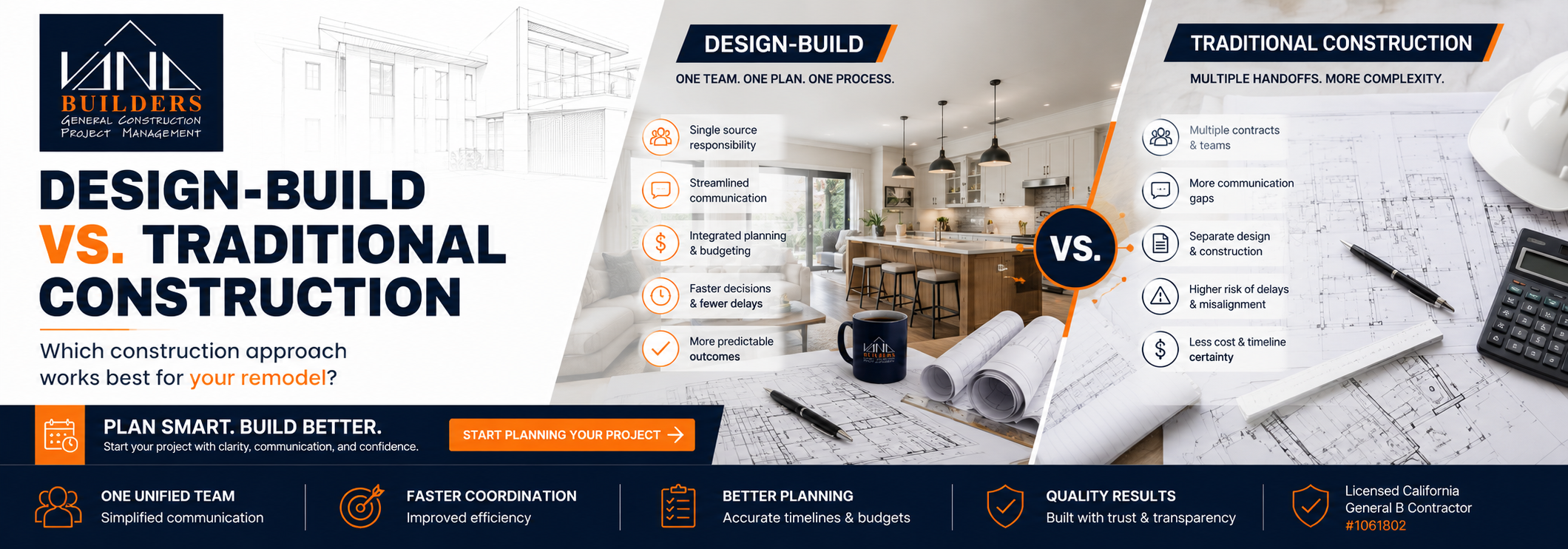
When planning a home remodel, room addition, or ADU project in California, one of the most important decisions homeowners make is choosing the right construction approach. Two of the most common methods are Design-Build construction and Traditional Construction, often called Design-Bid-Build.
While both methods can complete a remodeling project, the overall experience, communication process, timeline, and project coordination can be very different.
Understanding how these approaches work can help homeowners choose the right process for their goals, budget, and expectations.
What Is Design-Build Construction?
Design-Build is a construction method where one company manages both the design and construction phases of the project under a single system.
Instead of hiring separate architects, designers, and contractors independently, the homeowner works with one team that coordinates the entire project from planning through construction completion.
This approach is commonly used for:
- Home remodeling projects
- Kitchen remodeling
- Bathroom remodeling
- Room additions
- ADU construction
- Garage conversions
- Residential construction projects requiring multiple trades
The Design-Build process focuses on communication, coordination, and streamlined project management.

What Is Traditional Construction?
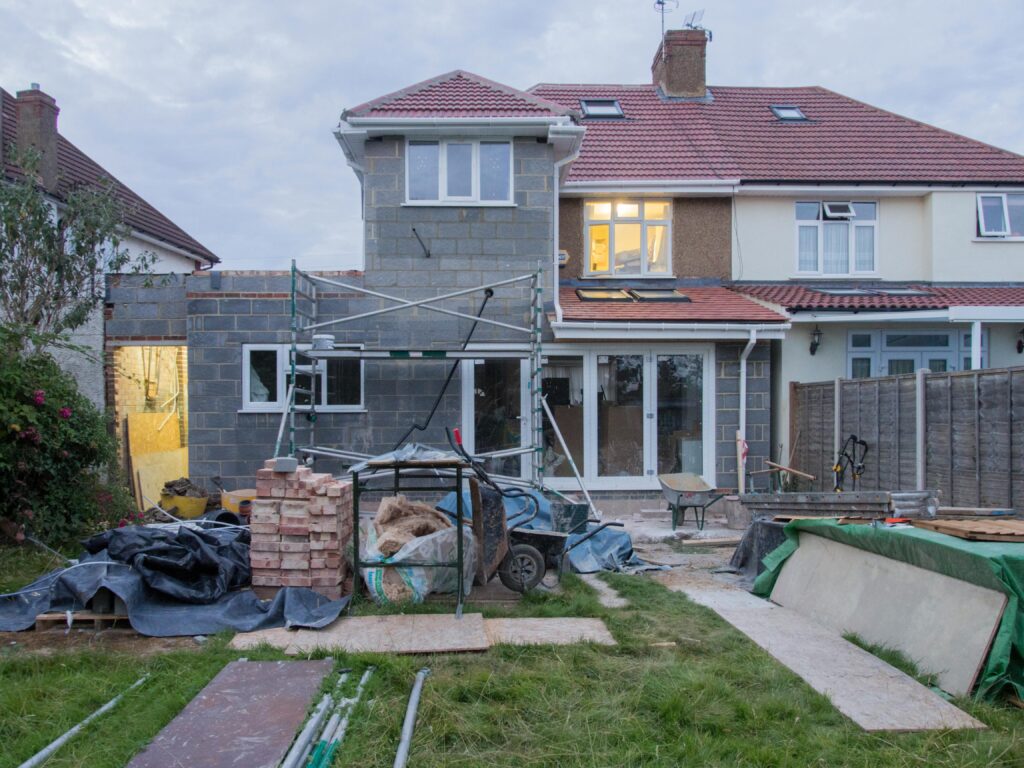
Traditional Construction, also known as Design-Bid-Build, separates the design and construction phases into different contracts and teams.
In this process:
- The homeowner hires a designer or architect first.
- Plans are completed separately.
- Contractors submit bids for the project.
- The homeowner selects a contractor after the design phase is complete.
This approach can work well for certain projects, but it often requires homeowners to manage communication between multiple parties throughout the process.
Key Differences Between Design-Build and Traditional Construction
Communication Structure
One of the biggest differences is communication.
With Design-Build:
- Homeowners communicate with one unified team.
- Design and construction coordination happen internally.
- Project updates are typically more centralized and organized.
With Traditional Construction:
- Communication often happens between separate designers, contractors, and consultants.
- Miscommunication can occur when responsibilities are divided between different parties.
For many homeowners, having a single point of communication creates a smoother experience throughout the remodeling process.
Project Timeline
Construction timelines can vary significantly depending on the project structure.
Design-Build Timelines
Design-Build projects can often move more efficiently because planning, budgeting, and scheduling happen together during early project development.
This can help reduce:
- Delays between design and construction phases
- Revisions during construction
- Coordination gaps between teams
Traditional Construction Timelines
Traditional projects typically move through separate phases one at a time:
- Design completion
- Bid process
- Contractor selection
- Construction scheduling
This structure can sometimes extend overall project timelines.
Budget Planning and Cost Control
Budget planning is another major difference.
Design-Build Budget Advantages
Because design and construction teams collaborate early, homeowners often receive:
- More realistic budget expectations
- Better alignment between design goals and construction costs
- Earlier visibility into material and trade requirements
This approach may help reduce major surprises later in the project.
Traditional Construction Budget Challenges
In Traditional Construction, homeowners may finalize designs before receiving contractor pricing.
This can sometimes lead to:
- Redesigns if costs exceed expectations
- Additional revisions
- Delays during the bidding process
Coordination of Trades and Construction Phases
Residential remodeling projects often involve multiple licensed trades working together in sequence.
These may include:
- Framing
- Drywall
- Finish carpentry
- HVAC
- Plumbing subcontractors
- Electrical subcontractors
A Design-Build contractor coordinates these phases as part of one structured process, helping improve scheduling and organization throughout the project
Which Construction Method Is Better for Remodeling Projects?
The right approach depends on the homeowner’s goals, communication preferences, and project complexity.
Design-Build May Be Better For:
- Homeowners seeking a streamlined process
- Projects requiring strong coordination
- Room additions and ADUs
- Remodels involving multiple trades
- Homeowners wanting centralized communication
Traditional Construction May Be Better For:
- Homeowners who already have completed architectural plans
- Projects requiring separate bidding processes
- Certain highly customized design scenarios
Why Many California Homeowners Choose Design-Build
In California remodeling and ADU construction, many homeowners prefer Design-Build because it simplifies communication and project coordination.
This is especially important for:
- Home remodeling in Los Angeles
- ADU construction
- Garage conversions
- Residential additions
- Projects requiring permits and multiple inspections
Having one structured team manage design, permits, scheduling, and construction can help homeowners better understand the process from start to finish.
The Importance of Working With a Licensed California Contractor
No matter which construction method you choose, working with a properly licensed contractor is essential.
Homeowners should verify:
- Contractor license status
- Experience with remodeling and additions
- Project management process
- Communication structure
- Compliance with California building standards
A licensed General B contractor can legally manage projects involving multiple trades while coordinating specialty subcontractors where required.
Start Your Remodeling Project
Planning a remodel or addition in Los Angeles?
Work with a contractor who prioritizes clarity, compliance, and long-term value.
California’s trusted General B Licensed Contractor. Building excellence since day one.
California General B Licensed Contractor — License #1061802
Contact US
1436 W Glenoaks Blvd Ste 121, Glendale, California 91201, US